
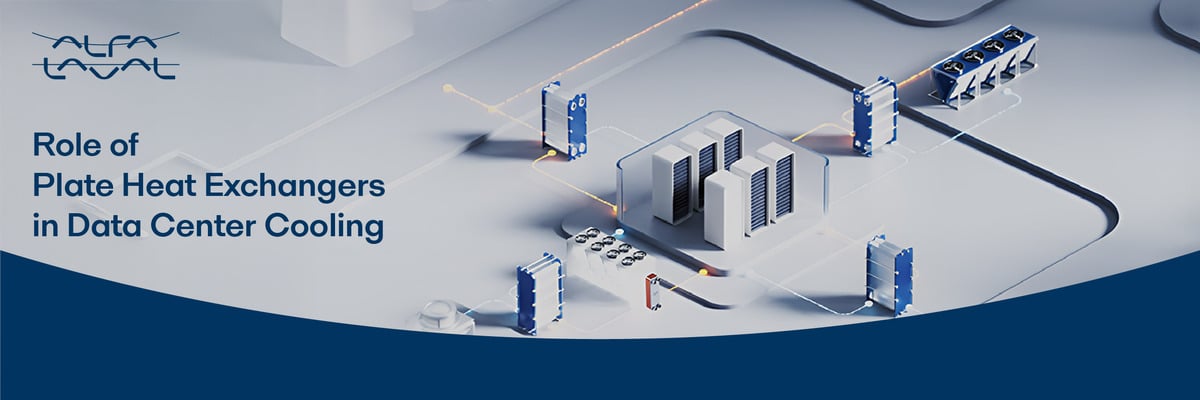
What Role Do Plate Heat Exchangers Play In Data Center Cooling?
Modern data centers are the backbone of our digital world, but they come with a significant challenge: servers create heat. Managing this heat is critical to ensure uptime, reliability, and energy efficiency. The data center cooling heat exchanger is a pivotal component in the thermal chain, connecting IT equipment cooling with facility-level heat rejection or reuse. Rather than focusing solely on the product, it’s essential to understand how the data center cooling heat exchanger fits into the broader cooling infrastructure—capturing, transporting, transferring, and ultimately rejecting or reusing heat.
DATE 2026-10-05The Role of Plate Heat Exchangers in Data Center Cooling
A data center cooling heat exchanger—specifically, the plate heat exchanger—transfers heat between separate cooling circuits without mixing the fluids. This separation is vital for maintaining water quality, preventing contamination, and optimizing system performance. Plate heat exchangers are found in critical locations such as cooling distribution units (CDUs), chilled-water systems, economizer/free-cooling loops, and heat-recovery systems.
Key Takeaways
- Plate heat exchangers provide circuit separation, protecting sensitive IT cooling loops from facility water.
- They enable integration with CDUs, supporting direct-to-chip and immersion cooling.
- The data center cooling heat exchanger allows for efficient heat transfer, supporting free cooling and heat recovery.
- They help manage pressure drop and pumping energy, impacting overall facility efficiency.
- Plate heat exchangers are compact, serviceable, and scalable for modern data center needs.
Where does a Heat Exchanger sit in the Data Center Cooling Chain?
The data center cooling heat exchanger is strategically placed between the IT cooling loop and the facility cooling loop. A typical process flow is:
Server → Coolant → CDU/PHE → Facility Loop → Heat Rejection/Reuse
OR
Server → Coolant → CDU/PHE → Facility Loop → GPHE→ Heat Rejection/Reuse
This arrangement ensures that the heat generated by servers is efficiently transferred to the facility’s heat rejection system, whether that’s a cooling tower, dry cooler, or a heat recovery system.
Explore cooling options for your facility.
Discover Alfa Laval’s Data Center cooling solutions.
How does a Plate Heat Exchanger work?
A plate heat exchanger consists of multiple thin, corrugated plates stacked together, creating alternating flow channels for hot and cold fluids. The fluids flow in a counter-current arrangement, maximizing thermal transfer without mixing. The optimised surface area and turbulent flow enhance heat transfer efficiency, making the data center cooling heat exchanger both compact and highly effective.
Key factors influencing plate heat exchanger performance include plate geometry, flow distribution, port design, and the effective management of fluid dynamics within the unit.
Why Plate Heat Exchangers are used in Data Centers
The data center cooling heat exchanger offers several advantages:
- Compact footprint: Fits into space-constrained environments.
- Close temperature approach: Achieves small temperature differences between fluids.
- High thermal efficiency: Maximizes heat transfer per unit area.
- Circuit isolation: Prevents contamination and allows for different fluid chemistries.
- Lower fluid volume: Reduces the amount of coolant required.
- Serviceability: Easy to maintain and expand as data center needs grow.
Role #1: Separating Technology and Facility Cooling Loops
One of the most critical functions of the data center cooling heat exchanger is to act as a “thermal/circuit break” between the technology cooling loop (e.g., server coolant) and the facility cooling loop (e.g., building chilled/cooling water). This separation is essential for:
- Contamination prevention: Protects sensitive IT equipment from impurities in facility water.
- Pressure management: Isolates different pressure zones, enhancing reliability.
- Coolant chemistry: Allows the use of specialized fluids (e.g., glycol, dielectric fluids) in the IT loop.
- Reliability: Ensures predictable performance and easier maintenance.
By reducing the volume of glycol or other coolants required in the protected loop, the data center cooling heat exchanger also lowers operating costs and environmental impact.
Role #2: Plate Heat Exchangers inside CDUs
In liquid-cooled data centers, the data center cooling heat exchanger is often integrated into CDUs. Here, it separates the primary (facility) side from the secondary (technology) side, providing:
- Temperature control: Maintains precise coolant supply temperatures for IT equipment.
- Low approach temperature/LMTD: Enables efficient heat transfer even with small temperature differences.
- Pressure drop management: Balances pumping energy with thermal performance.
The data center cooling heat exchanger is thus central to achieving high efficiency and reliability in direct-to-chip and immersion cooling architectures.
Role #3: Enabling Waterside Economization and Free Cooling
When outdoor conditions are favorable, the data center cooling heat exchanger enables “free cooling” by transferring heat from the data center loop to an external water or air loop—without mixing fluids. This can be achieved through:
- Chiller bypass: Reduces reliance on mechanical refrigeration, saving energy.
- Free cooling with natural water: Uses river, lake, sea, or geothermal water, separated from the data center loop by the heat exchanger.
- Free cooling with air: Transfers heat to an external air cooler, with the heat exchanger providing circuit isolation.
This flexibility makes the data center cooling heat exchanger a key enabler of energy-efficient data center operations.
Role #4: Supporting Direct-to-Chip Liquid Cooling
As data centers adopt direct-to-chip liquid cooling, the data center cooling heat exchanger becomes even more critical. The typical flow is:
Cold Plate → Secondary Coolant → CDU/PHE → Facility Water → Heat Rejection
OR
Cold Plate → Secondary Coolant → CDU/PHE → GPHE→ Facility Water → Heat Rejection
Here, the heat exchanger ensures that the heat captured at the chip level is efficiently transferred to the facility loop, supporting higher power densities and improved cooling performance.
Role #5: Supporting Immersion Cooling Systems
Immersion cooling involves submerging IT equipment in a dielectric fluid. The data center cooling heat exchanger transfers heat from the immersion loop to the facility cooling system, enabling efficient heat rejection or recovery.
Role #6: Recovering Data Center Waste Heat (Revenue Model across industries)
Data centers generate significant amounts of waste heat. The data center cooling heat exchanger can transfer this heat to district heating networks, buildings, industrial processes, or heat pumps—turning a waste product into a valuable resource. Waste heat can be effectively utilized for several applications, such as power generation using Organic Rankine Cycle (ORC) technology, chilled water generation, and atmospheric water generation by extracting and condensing moisture from the air
Gasketed vs. Brazed Plate Heat Exchangers in Data Centers
There are two main types of data center cooling heat exchanger: gasketed and brazed. Each has its advantages:
|
Feature |
Gasketed Plate Heat Exchanger |
Brazed & Fusion bonded Plate Heat Exchanger |
|
Capacity |
High |
Medium |
|
Footprint |
Larger |
Compact |
|
Serviceability |
Easy to clean/expand |
Limited |
|
Scalability |
High |
Moderate |
|
Fluid/Application |
Water/glycol, high fouling, Sea water, river water |
Clean fluids, low fouling |
|
Maintenance |
Regular cleaning possible |
Minimal |
|
CDU Use |
Possible |
Common |
The choice depends on application requirements, fluid properties, and maintenance preferences.
Find the right heat exchanger for your duty.
Explore Alfa Laval’s plate heat exchanger range.
Plate Heat Exchanger vs. Shell-and-Tube: Why Compactness Matters
Compared to shell-and-tube designs, the data center cooling heat exchanger (plate type) offers higher surface-area density, a smaller footprint, and a closer temperature approach. This makes it ideal for space-constrained data centers seeking maximum efficiency. Both gasketed and brazed liquid-to-liquid plate heat exchangers can be supplied with certified performance validation, ensuring reliable and verified thermal performance.
What determines Heat Exchanger performance?
Several engineering factors influence the performance of a data center cooling heat exchanger:
Temperature Approach and LMTD
The “approach temperature” is the difference between TWS Outlet & FWS Inlet temp in heat exchanger. A lower approach temperature means more efficient heat transfer. The Log Mean Temperature Difference (LMTD) is a key design parameter for sizing the heat exchanger.
Flow Rate
Higher flow rates increase thermal capacity but may also raise pressure drop and pumping energy requirements.
Pressure Drop
The data center cooling heat exchanger must balance heat transfer with acceptable pressure drop to minimize pumping costs.
Plate Geometry
The design of the plates affects the balance between heat transfer efficiency and pressure drop.
Fluid Properties
Water, glycol mixtures, dielectric fluids, or other secondary fluids may be used, depending on the cooling architecture.
Fouling
Cleanliness is critical, as fouling reduces heat transfer efficiency and increases pressure drop. Ensuring good quality on both the primary and secondary sides help minimize maintenance and sustain long-term performance.
Materials
Material selection must consider corrosion resistance and water chemistry to ensure long-term reliability.
How Plate Heat Exchangers Influence PUE, WUE, and CUE
The data center cooling heat exchanger impacts key efficiency metrics:
- PUE (Power Usage Effectiveness): By enabling chiller bypass and economization, the heat exchanger reduces the energy required for cooling.
- WUE (Water Usage Effectiveness): Efficient heat rejection architectures minimize water consumption.
- CUE (Carbon Usage Effectiveness): Lower energy use translates to reduced carbon emissions.
However, it’s important to note that equipment alone does not determine these metrics—system design and operation are equally important.
Reliability and Uptime Considerations
The data center cooling heat exchanger supports reliability through:
- Redundancy: Multiple units can be installed for backup.
- Isolation: Circuit separation prevents cross-contamination.
- Clean circuits: Reduces fouling risk.
- Maintainability: Easy access for cleaning and inspection.
- Predictable performance: Ensures consistent cooling capacity.
Why Certified Thermal Performance Matters
Selecting a data center cooling heat exchanger with AHRI certification ensures that the unit delivers its rated thermal performance. This is critical for avoiding undersized or oversized equipment and ensuring reliable operation. Manufacturers like Alfa Laval highlight independently certified heat-transfer performance for data center applications.
How to Select a Plate Heat Exchanger for Data Center Cooling
A structured decision framework for selecting a data center cooling heat exchanger includes:
- Heat load
- Inlet/outlet temperature
- Approach temperature
- Flow rate
- Pressure drop
- Fluids used
- Design pressure
- Water quality
- Fouling risk
- Redundancy
- Maintainability
- Available footprint
- Expansion capacity
- Certification
New Build vs. Retrofit Considerations
When integrating a data center cooling heat exchanger into a new or existing facility, consider:
- Space constraints
- Existing chilled-water loop
- Piping layout
- Chiller bypass opportunities
- Scalability for future growth
Common Heat Exchanger Design Mistakes
Avoid these pitfalls when specifying a data center cooling heat exchanger:
- Oversimplified sizing
- Excessive pressure drop
- Ignored fouling risk
- Unsuitable materials
- Lack of redundancy
- No allowance for future thermal headroom
- Assuming performance without certification
Plan your liquid cooling upgrade.
Discover Alfa Laval’s liquid cooling solutions.
Heat Transfer as the Link Between IT Cooling and Facility Cooling
The data center cooling heat exchanger is not just a component—it is the critical link connecting IT heat capture to facility-level heat rejection or reuse. By providing circuit separation, enabling advanced cooling architectures, and supporting energy and water efficiency, the data center cooling heat exchanger is essential for modern, reliable, and sustainable data center operations.
FAQs
1. What is the role of a plate heat exchanger in a data center?
A plate heat exchanger transfers heat between separate cooling circuits without mixing fluids, ensuring efficient cooling while maintaining circuit isolation and water quality.
2. Why are plate heat exchangers used in Cooling Distribution Units (CDUs)?
They separate the facility cooling loop from the technology cooling loop, enabling precise temperature control and efficient heat transfer for liquid-cooled servers.
3. How do plate heat exchangers support direct-to-chip cooling?
They transfer heat captured by cold plates from processors to the facility water loop, enabling the cooling of high-density computing environments.
4. Can plate heat exchangers improve data center energy efficiency?
Yes. They enable free cooling, economization, and chiller bypass strategies that reduce reliance on mechanical refrigeration and lower energy consumption.
5. What is the difference between gasketed and brazed plate heat exchangers?
Gasketed units are serviceable, expandable, and suited for larger capacities, while brazed units are compact, maintenance-light, and ideal for clean-fluid applications.
6. How do plate heat exchangers help with heat recovery?
They can transfer waste heat from data center cooling systems to district heating networks, buildings, industrial processes, or heat pumps for beneficial reuse.
7. What factors should be considered when selecting a heat exchanger for data center cooling?
Key considerations include heat load, temperatures, flow rates, pressure drop, fluid type, fouling risk, footprint, scalability, redundancy, and performance certification.
Author
Pratik Lele is a member of the Global Data Center Industry Team at Alfa Laval, with over 20 years of experience in HVAC&R and thermal management solutions. Specializing in single-phase and two-phase heat transfer applications, he works extensively with Alfa Laval’s portfolio of compact, energy-efficient heat exchangers. His expertise spans rear door heat exchangers (RDHx), direct-to-chip liquid cooling (DCLC), immersion cooling technologies, and data center cooling distribution units (CDUs). Passionate about advancing energy efficiency and circularity across the data center ecosystem, he brings strong experience in business development, strategic collaborations, key account management, and distribution management to drive sustainable innovation in the industry.