
Free cooling with natural water for high-efficiency data centers
Maximize energy savings, eliminate refrigerants, and boost cooling efficiency at least 30%, without consuming a single drop of water.
When sustainability and cost savings converge, the right cooling equipment makes it possible for data centers to:
- Boost efficiency at least 30%
- Cut operational expenses
- Reduce reliance on refrigerants
- Lower PUE
- Meet emissions targets
Let nature do the cooling
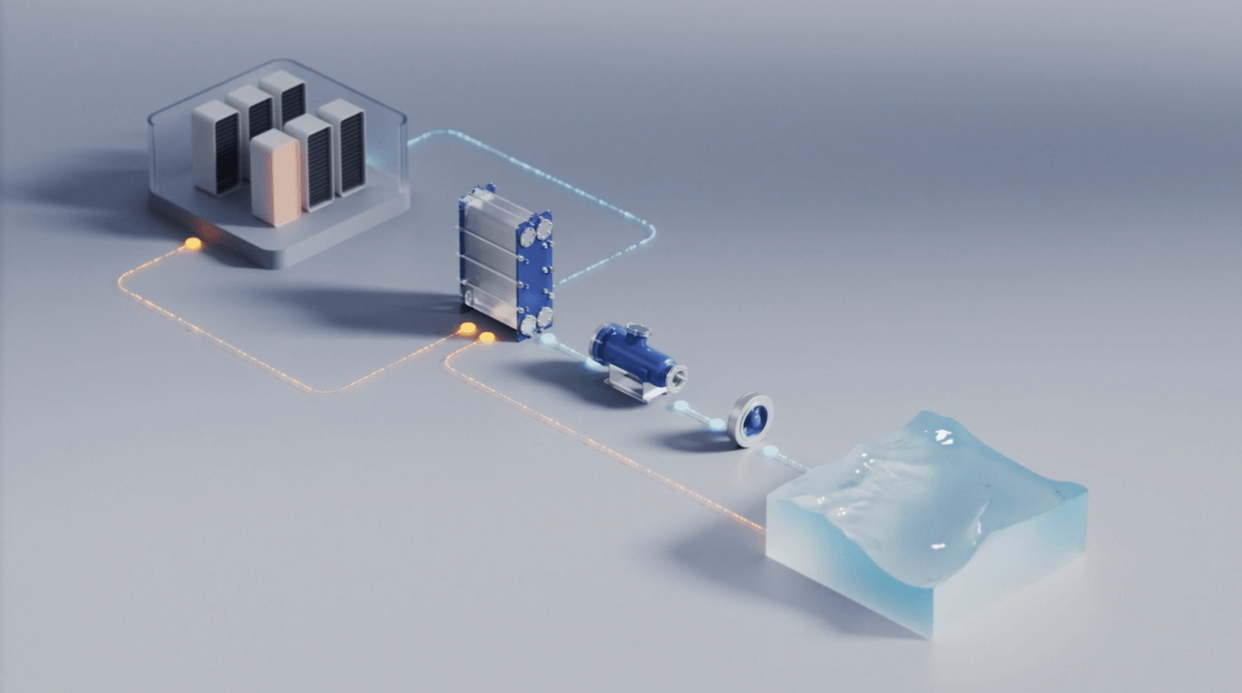
Free cooling with water leverages naturally available sources such as rivers, lakes, seas, and geothermal wells to reduce energy demand in data center cooling systems. Cold water from these sources is circulated through a heat exchanger, where it absorbs heat from the data centre’s closed-loop cooling circuit without mixing with it. After transferring the heat, the water is returned to its original source with only a minimal temperature increase, ensuring responsible thermal discharge and preserving environmental integrity.
Plug‑and‑play module using natural water source
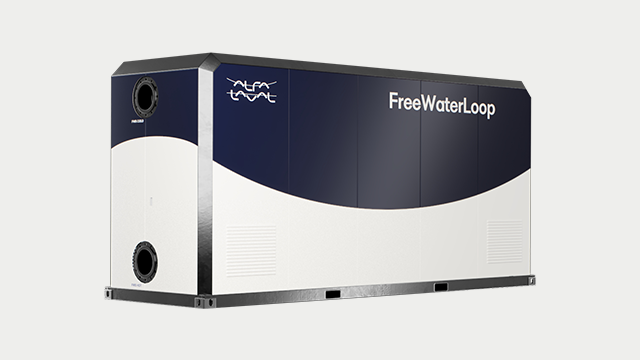
Alfa Laval FreeWaterLoop transforms natural water sources into a highly efficient cooling asset for your data center. Each modular, factory‑built unit integrates heat exchange, filtration, pumping and intelligent controls into a streamlined, plug‑and‑play system engineered for reliable, year‑round performance. With unmatched efficiency, a compact footprint and seamless connection to your facility infrastructure, FreeWaterLoop enables high‑density computing, rapid deployment, and sustainable operation.
Cooling with a chiller or chiller bypass
Data centers located near a natural resource can, if required, pair this cooling method with mechanical chillers or bypass them entirely, depending on system design and local conditions.
Cooling with a trim chiller
Naturally cold water enters the heat exchanger and reduces the load on the chiller.
- Cuts energy use by easing chiller demand
- Maintains reliable cooling in variable climates
- Extends equipment life by reducing thermal stress
Cooling with a chiller bypass
When natural water is cold enough, it bypasses the chiller and is circulated through a heat exchanger where it absorbs heat.
- Allows complete chiller shutdown during favorable conditions
- Maximizes energy savings
- Minimal reliance on mechanical support
Rewriting the rules of cooling with a hybrid seawater approach
Explore how Portugal’s Start Campus is redefining efficiency. The 1.2 GW sustainable data center leverages seawater cooling and a hybrid twice-through water system to achieve ultra-low PUE and more than 50,000 tons in annual CO₂ savings, showing how smart cooling can go beyond efficiency to drive real transformation.

Well-engineered systems start here
Natural water systems bring unique challenges, from water quality and environmental impact to infrastructure and regulatory compliance. Alfa Laval is here to help you navigate them all.
By engaging with us early, you’ll gain a partner with the know-how to help you plan your optimal cooling strategy from the start. Together, we’ll design a robust solution that will yield incredible energy-savings for data centers to grow on today and in the future.
Ready to unlock the power of free cooling?
Want to boost efficiency by up to 30%, lower OpEx, reduce refrigerant use, and improve WUE with no net water waste? Connect with our cooling experts to explore how Alfa Laval can help you unlock sustainable performance from natural resources.
FAQs
Which natural water sources should a project assess?
The page discusses rivers, lakes, seas and geothermal wells. Assess source temperature, availability and local intake and discharge requirements.
Does natural source water enter the data center cooling loop?
The heat exchanger separates source water from the closed facility loop. Heat transfers between the circuits without mixing the fluids.
What determines whether natural water supports full chiller bypass?
Source water temperature, heat exchanger performance and target coolant temperature determine feasibility. Warmer conditions require supplementary cooling.
How does trim chilling support variable source temperatures?
Natural water removes part of the heat load, while the chiller supplies the remaining cooling needed to meet the required temperature.
Why should source water quality be assessed early?
Debris, biological growth and dissolved substances influence filtration and material selection. Early testing supports a suitable cooling system design.
How should seawater cooling materials be selected?
Select wetted materials for the measured seawater chemistry and operating conditions. Confirm corrosion resistance with the equipment supplier.
Does returning water to its source remove environmental review requirements?
No. Intake design, discharge temperatures and ecological effects still need assessment under the applicable local requirements.
What does FreeWaterLoop add to a natural water installation?
It combines heat exchange, filtration, pumping and controls in a modular interface between the natural source and data center.
What should be checked before estimating natural water cooling savings?
Check seasonal source temperatures, pumping needs and chiller use. Evaluate total system electricity against the existing or proposed baseline.