
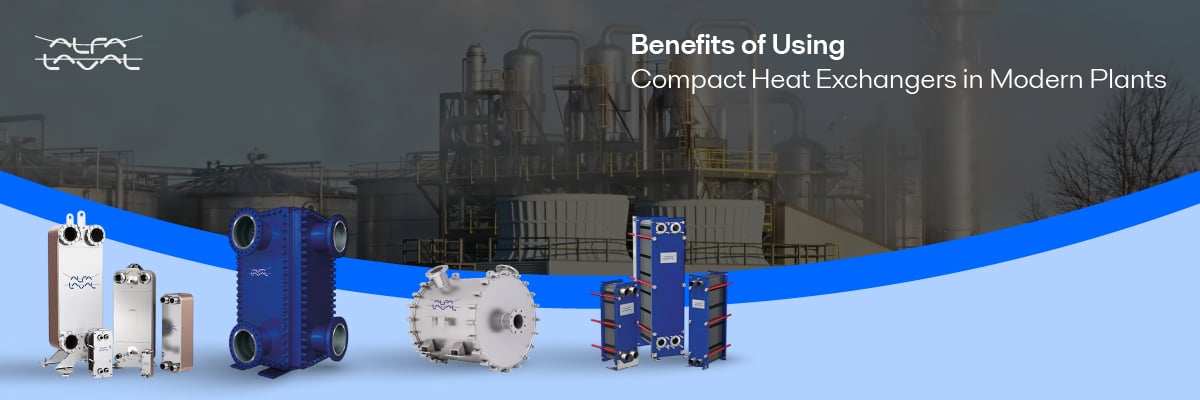
Benefits of Using Compact Heat Exchangers in Modern Plants
Heat exchangers play a critical role in industrial processes by transferring heat between fluids without direct mixing, improving energy efficiency and temperature control. As industries prioritize compact, high-performance systems, the adoption of the plate type heat exchanger is rapidly increasing. Leading heat exchanger manufacturer brands are driving innovation with space-saving designs that reduce operating costs and emissions. This trend is also boosting the growth of heat exchanger companies in India, particularly across pharmaceuticals, HVAC, food processing, and petrochemical sectors.
DATE 2026-08-05What is a Compact Heat Exchanger?
A compact heat exchanger is designed to provide maximum heat transfer efficiency within a small footprint by increasing the surface area per unit volume. Compared to traditional systems, a plate type heat exchanger can achieve higher efficiency with less space.
According to Alfa Laval heat exchanger solutions, heat exchangers work by transferring heat between fluids across conductive surfaces, improving thermal management without mixing the fluids.
Types:
- Plate Heat Exchangers (Plate type heat exchanger): Highly efficient and flexible
- Microchannel Heat Exchangers: Extremely compact with high performance
- Brazed Plate Heat Exchangers: Maintenance-free and compact (Brazed Plate HEX)
Key Benefits of Compact Heat Exchangers
Space-Saving Design for Modern Plants
A major advantage of compact systems is their reduced footprint. A single compact unit can replace multiple traditional exchangers, making them ideal for modern plants where space is limited.
High Thermal Efficiency
- Better Heat Transfer Performance: Compact heat exchangers such as the plate type heat exchanger offer up to 3–5 times higher efficiency than conventional systems (Compabloc)
- Reduced Energy Consumption: Improved heat exchanger efficiency reduces energy usage by maximizing heat transfer and minimizing losses. Advanced designs by Alfa Laval like optimized plate geometry and enhanced flow distribution ensure better performance, lower power consumption, and reduced emissions, helping plants cut operating costs and environmental impact.
Cost-Effective Operation & Maintenance
- Lower Operational Costs: Enhanced heat recovery reduces energy bills significantly.
- Reduced Maintenance: Systems like brazed plate heat exchangers require little to no maintenance A reliable heat exchanger manufacturer will always emphasize low lifecycle cost as a major benefit.
Lightweight and Modular Construction
Compact heat exchangers are lightweight, making installation faster and more cost-effective. Their modular design allows easy expansion and seamless integration into existing systems, providing flexibility for future upgrades and minimizing downtime.
Enhanced Process Performance
Compact heat exchangers provide better temperature control and improved heat recovery, leading to higher productivity and process efficiency.
The use of a plate type heat exchanger ensures consistent performance and better process optimization.
Applications of Compact Heat Exchangers in Modern Plants
Compact heat exchangers are widely used across industries:
- HVAC Systems: Heating and cooling applications
- Chemical & Petrochemical Plants: Heat recovery and process optimization
- Food & Beverage: Hygienic processing
- Power Plants: Cooling and waste heat recovery
- Refrigeration Systems: Efficient temperature control
How to Choose the Right Compact Heat Exchanger
When selecting a compact heat exchanger, consider:
- Capacity and heat load
- Material compatibility
- Temperature and pressure range
- Maintenance requirements
- Application-specific needs
Alfa Laval also offers dedicated selection support through its PHE selector tool and HEXpert Tool which helps industries choose the most suitable compact heat exchanger based on specific process requirements.
Future Trends in Compact Heat Exchanger Technology
The future of compact heat exchangers is driven by innovation:
- Smart monitoring and digital integration
- Advanced materials for durability
- Integration with renewable energy systems
- Improved designs for higher efficiency
As per Alfa Laval’s sustainability focus, compact systems will play a key role in reducing carbon emissions and improving energy efficiency
Compact vs Traditional Heat Exchangers
| Feature | Compact Heat Exchangers | Traditional (Shell & Tube) |
|
Size |
Large and bulky |
|
|
Efficiency |
Lower |
|
|
Temperature Approach |
As low as 1–3°C |
Typically 5–10°C+ |
|
Maintenance |
Minimal |
High |
|
Cost |
Lower lifecycle cost |
Higher |
Compact heat exchangers are transforming industrial thermal systems by offering superior efficiency, reduced size, and lower operational costs. Technologies like the plate type heat exchanger have become a preferred choice for modern plants due to their high heat transfer efficiency and flexibility. With strong support from global players and heat exchanger companies in India, industries can achieve better performance and sustainability goals. Compared to traditional systems, compact heat exchangers deliver better ROI, easier maintenance, and improved process control. As industries continue to focus on energy efficiency and environmental impact, adopting compact heat exchangers from a reliable heat exchanger manufacturer will be a strategic step toward future-ready operations.
Key Takeaways
- Compact heat exchangers are up to 75% smaller than traditional shell & tube units, saving plant space.
- They offer 3-5x higher heat transfer efficiency than conventional heat exchangers.
- Improved heat recovery helps reduce energy consumption and operating costs.
- Lower energy usage contributes to reduced carbon emissions and improved sustainability.
- Their lightweight and modular design enables faster installation and easy expansion.
- They provide better temperature control, improving process efficiency and productivity.
- Widely used across HVAC, petrochemical, food & beverage, power, and refrigeration industries.
- Compared to traditional systems, they deliver better ROI, lower maintenance, and lower lifecycle costs.
- Future advancements such as smart monitoring, advanced materials, and renewable energy integration will further enhance performance.
FAQs
What makes compact heat exchangers different from traditional ones?
Compact heat exchangers have a higher surface area-to-volume ratio, allowing more efficient heat transfer in a smaller size compared to traditional shell-and-tube exchangers. This results in better performance, reduced space requirements, and lower energy use.
Are compact heat exchangers suitable for all industries?
Yes, they are widely used across industries such as food and beverage, pharmaceuticals, chemical processing, HVAC, and power generation. However, the choice depends on specific process requirements like temperature, pressure, and fluid characteristics.
How do compact heat exchangers improve energy efficiency?
Their design enhances heat transfer efficiency, meaning less energy is required to reach desired temperature levels. This leads to reduced energy consumption and lower operational costs.
What maintenance is required for compact heat exchangers?
Maintenance is generally minimal compared to traditional systems. Plate heat exchangers can be easily cleaned, while brazed units require less frequent servicing due to their sealed design.
Can compact heat exchangers handle high pressure, high temperature, and close temperature approaches?
Yes. Brazed plate heat exchangers can withstand high pressures and temperatures while achieving temperature approaches as low as 1–3°C, maximizing heat recovery and efficiency.
Author
Rutuja Chavan
Rutuja Chavan is a Product & Application Expert based in Pune, India, with 4 years of experience in application engineering, product selection, and technical support for industrial equipment. She works closely with sales, engineering, and customers to deliver optimized solutions, prepare technical documentation, and support both standard and emergency operating scenarios, while ensuring alignment with commercial terms.